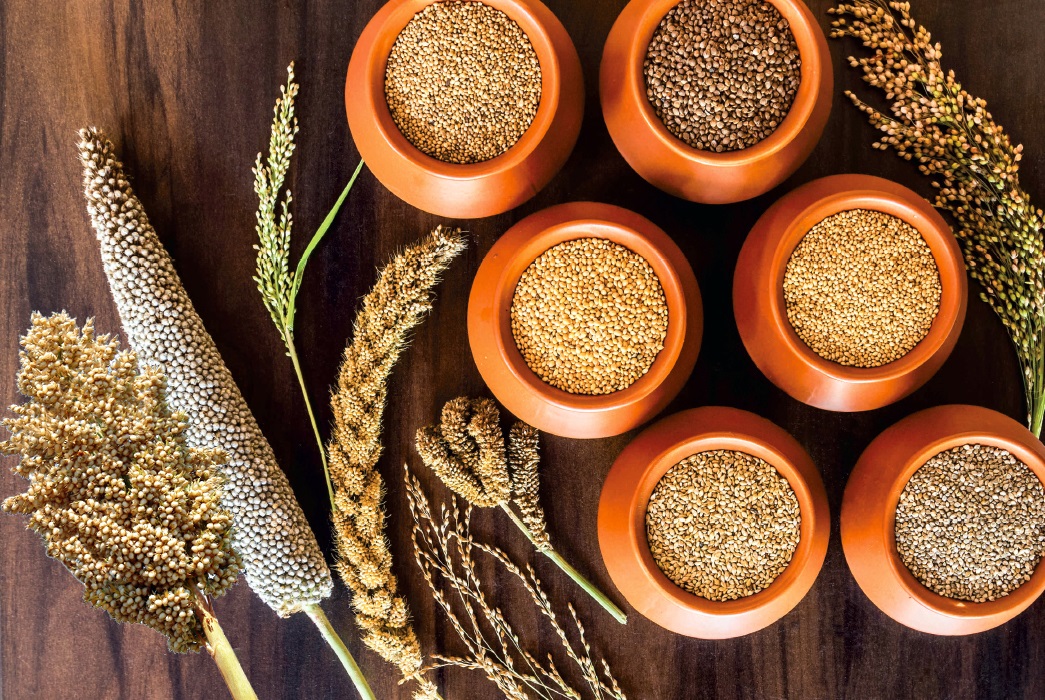
Millets have been used in Indian cuisine for millennia. These small-grained, annual grasses are highly nutritious and offer several health benefits.
They are gluten-free, easy to digest, and rich in fiber, minerals, and antioxidants. India is the largest producer and consumer of millets in the world, and they are a staple food for many regions across the country.
Types of Indian Millet, Their Nutritional Values

1. Pearl Millet (Bajra)
Pearl millet is one of the widely cultivated millet varieties in India. It is known for its high iron content and is a good source of protein, fiber, and B vitamins. A coarse grain or flour is made from pearl millet. It is used to make rotis (flatbreads) and porridge, and various traditional recipes.
2. Finger Millet (Ragi)
Finger millet is rich in calcium, iron, and amino acid content. It is known to have a low glycemic index, making it suitable for managing diabetes. Finger millet as flour makes rotis, dosas (pancakes), porridge, and cookies or added to soups and stews.
3. Foxtail Millet (Kangni)
Foxtail millet is rich in minerals like iron, magnesium, and phosphorus. It’s also a fantastic source of protein and fibre. Foxtail millet can be cooked and consumed like rice, used to make porridge, or ground into flour for rotis or dosas.

4. Little Millet (Kutki):
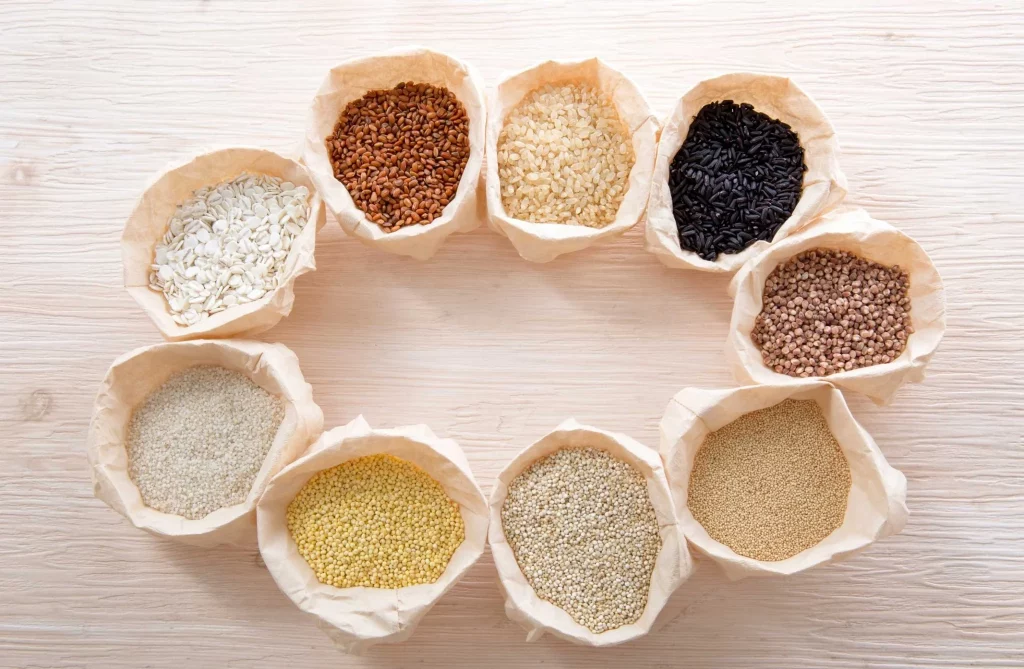
Little millet is known for its high iron and fiber content. It has no gluten and has a low glycemic index. Little millet can be cooked and used as a substitute for rice in various dishes. It is commonly used as pulao, dosas, upma (savory porridge), soups, and salads.
5. Kodo Millet (Kodra)
Kodo millet is a good source of protein, dietary fiber, and antioxidants. It is known for its ability to improve digestion and reduce cholesterol levels. Kodo millet can be cooked and used as a substitute for rice or used in making dosas, upma, or porridge.
6. Barnyard Millet (Sanwa)
Barnyard millet is a rich source of protein, fiber, and B vitamins. It is devoid of gluten and has a low glycemic index. Barnyard millet can be cooked and used as a rice alternative or used in making dosas, porridge, or upma.
Health benefits of Indian millets
1. Rich in nutrients
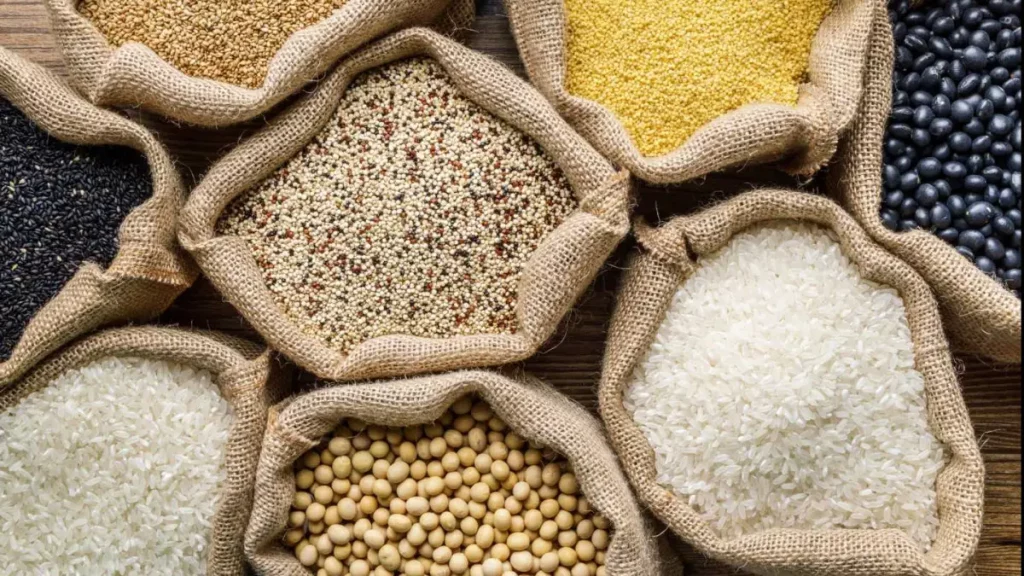
Indian millets like ragi (finger millet), jowar (sorghum), bajra (pearl millet), and foxtail millet are packed with essential nutrients like calcium, iron, magnesium, potassium, and vitamins B1, B2, B3, and B6.
2. Gluten-free
Millets are naturally gluten-free, making them a suitable option for individuals with gluten intolerance or celiac disease, incorporated into a gluten-free diet without causing any digestive issues.
3. Better digestion
Millets are high in dietary fiber, which helps in promoting healthy digestion and preventing constipation. It aids in improving gut health and reducing the risk of gastrointestinal disorders.
4. Weight management
Millets have a low glycemic index, which means they release sugars into the bloodstream slowly. It helps in regulating blood sugar levels and preventing sudden spikes, making them a good choice for weight management and diabetes control.
5. Heart health
Millets have a high content of antioxidants, and phenolic compounds, which reduces the risk of heart disease. They also contain high levels of magnesium to better cardiovascular health.
6. Diabetes management
Millets have a favorable impact on blood sugar levels due to their low glycemic index and high fiber content. They help in improving insulin sensitivity, reducing the risk of type 2 diabetes, and managing blood glucose levels.
7. Improved bone health
Millets, especially ragi, are rich in calcium, which is crucial for strong bones and teeth. They also contain other minerals like phosphorus and magnesium, which aid in maintaining bone health and preventing conditions like osteoporosis.
8. Enhanced brain function
Millets contain essential amino acids for enhancing brain function and cognitive abilities. They are also a good source of B vitamins, which support brain health and mental well-being.
9. Reduced risk of chronic diseases
The high antioxidant content in millets helps reduce oxidative stress and inflammation in the body, thereby lowering the risk of chronic diseases like heart disease, cancer, and neurodegenerative disorders.
10. Energy boost
Millets are a good source of complex carbohydrates, which provide sustained energy throughout the day, recommended for athletes and individuals with high energy requirements.
Easy Indian millet recipes for dinner
Here are some Indian millet recipes to try this winter and let us know how to cook Indian millet at home.
1. Millet Upma
- Heat oil in a pan and add mustard seeds, cumin seeds, and chopped green chilies.
- Add finely chopped onions and vegetables (carrots, peas, bell peppers), and sauté until they become tender.
- Add washed millet and roast for a few minutes.
- Add water, salt, turmeric powder, and cook on low flame until the millets become fluffy.
2. Millet Pulao:
- Heat ghee or oil in a pressure cooker and add cinnamon, cloves, and cardamom.
- Sauté the chopped onions until they are transparent.
- Add chopped vegetables (carrots, beans, peas) and sauté for a few minutes.
- Add washed millets, water, salt, and pressure cook for 1-2 whistles.
- Fluff the millets using a fork, garnish with chopped coriander leaves and serve.
3. Millet Kheer:
- Wash the millets and soak them for 30 minutes.
- In a pan, boil milk and add the soaked millets.
- Cook on medium flame until the millets become soft and the kheer thickens.
- Add sugar and cardamom powder.
- Garnish with chopped nuts (cashews, almonds, pistachios) and serve warm or chilled.
**Note: You can customize these recipes by adding your favorite spices, vegetables, or condiments to enhance the flavors.
Nutritional comparison of different millets
Different types of millet vary in their nutritional composition. Here is a comparison of some commonly consumed millets:

1. Foxtail Millet
Foxtail millet is high in dietary fiber and protein, and low in fat. It contains essential amino acids and is a good source of minerals such as iron, magnesium, and phosphorus.
2. Pearl Millet
Pearl millet is rich in dietary fiber, protein, and essential amino acids. It is high in iron, magnesium, phosphorus, and B vitamins, making it a good energy source.
3. Finger Millet
Finger millet is known for its high calcium content beneficial for bone health. It is also high in dietary fiber, protein, and essential amino acids. Finger millet contains various minerals like iron, phosphorus, and magnesium.

4. Barnyard Millet
Barnyard millet is gluten-free and low in glycemic index, making it suitable for diabetics. It is a good source of dietary fiber, protein, and essential amino acids. Barnyard millet also contains minerals such as iron, calcium, and phosphorus.
5. Kodo Millet
Kodo millet is rich in dietary fiber, protein, and essential amino acids. It is a good source of minerals like iron, calcium, and phosphorus. Kodo millet has a high antioxidant activity.
6. Little Millet
Little millet is high in dietary fiber, protein, and essential amino acids. It contains minerals like iron, magnesium, and phosphorus. Little millet is low in glycemic index and apt for weight management and diabetes control.
Millets are nutritionally rich and provide a range of essential nutrients. It is why our Prime Minister, Shri Narendra Modi binges on millet. They are gluten-free and have a lower glycemic index compared to traditional grains, making them suitable for people on gluten-free diets in India. Additionally, millets are environmentally friendly and sustainable crops to cultivate.
Exploring the role of millets in Indian weight loss diets
Millets, a group of small-seeded grasses, have traditionally been a staple in Indian diets. They are nutrient-dense and have gained attention for their potential role in weight loss diets. Here’s a closer look at how millets contribute to weight loss in Indian cuisine and how they are better than normal grains:

1. High Fiber Content
Millets, such as ragi (finger millet), jowar (sorghum), and bajra (pearl millet), are rich in dietary fiber. Fiber promotes satiety, making you feel fuller for long periods and reducing the overall calorie intake. Additionally, fiber slows down the digestion process, preventing sudden spikes in blood sugar levels.
2. Low Glycemic Index
Millets have a low glycemic index (GI), which means they are digested slowly and do not cause a rapid increase in blood sugar levels. Consuming foods with a low GI can help regulate appetite, control cravings, and promote weight loss.
3. Nutrient Density
Millets possess essential nutrients like vitamins (B-complex vitamins, vitamin E), minerals (iron, magnesium, zinc), antioxidants, and phytochemicals. These nutrients support overall health and metabolism, facilitating weight loss.
4. Gluten-Free and Digestibility
Millets are naturally gluten-free and easy to digest compared to wheat and other grains, making them suitable for people with gluten sensitivities or digestive issues. Improved digestion aids in weight management.
5. Lower Fat Content
Millets are generally low in fat, particularly saturated fats. Combining millet with other nutrient-rich ingredients can help reduce the overall calorie intake while providing necessary dietary fats.
Conclusion
Incorporating millet into your diet can offer various health benefits and add diversity to your meals. Whether it’s as a rice substitute, making flour for bread or pancakes, or used in soups or porridge, millets can be a nutritious addition to your kitchen. An Indian nutritionist recommends seasonal millet dishes for winter wellness.